Blog

Your blog category

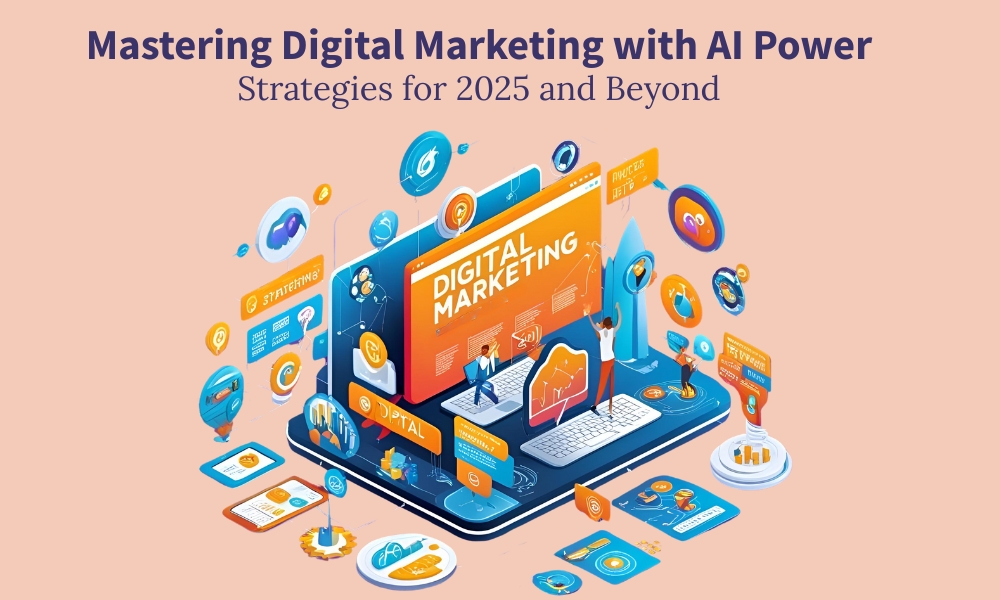
Mastering AI in Digital Marketing: Strategies for 2025 and Beyond

Artificial Intelligence (AI) is no longer a futuristic idea—it is the driving force behind today’s most successful digital marketing strategies. As we move into 2025 and beyond, AI’s role will only deepen, helping brands make smarter decisions, automate complex tasks, and create hyper-personalized customer experiences. In this blog, we’ll explore how businesses can master AI for digital marketing success, what trends to watch, and practical strategies to stay ahead in the AI-powered future. Why AI Is Crucial for Digital Marketing in 2025 The digital marketing landscape is evolving rapidly. Consumers demand faster, more personalized experiences, and brands need to keep up without overwhelming their teams or budgets. AI provides the solution by offering: – Automation: Simplifying time-consuming tasks such as managing ads and sending emails. – Data-Driven Insights: Turning massive amounts of data into actionable strategies. – Personalization at Scale: Crafting individualized experiences for millions of users. – Predictive Capabilities: Anticipating customer needs and behaviors before they happen. Why AI Is Crucial for Digital Marketing in 2025 1. Hyper-Personalization Today’s customers expect brands to know their preferences. AI enables businesses to analyze browsing habits, past purchases, and online behavior to deliver tailored content, product recommendations, and ads. Example: Spotify’s personalized playlists and Amazon’s product suggestions are perfect examples of AI-driven personalization that keeps users engaged and loyal. Action Tip: Use AI-powered CRM tools like Salesforce Einstein or Adobe Sensei to segment audiences and automate personalized communications. 2. Smarter Content Creation AI tools are playing a growing role in supporting content creation. Platforms like Jasper and Copy.ai can generate blog ideas, social media captions, email marketing copy, and even ad headlines. While human creativity is irreplaceable, AI can provide a strong foundation, speeding up the brainstorming and drafting process. Action Tip:Combine AI writing tools with human editing to maintain authenticity and emotional resonance in your brand voice. 3. Predictive and Prescriptive Analytics Predictive analytics forecasts future customer actions based on past data, allowing marketers to target prospects more effectively. Prescriptive analytics goes a step further, offering actionable recommendations on what strategies to implement. Example:Retail brands use predictive analytics to suggest products a customer is likely to buy next, boosting cross-sell and upsell opportunities. Action Tip:Incorporate predictive tools like Pega or IBM Watson into your marketing strategy to fine-tune customer targeting and campaign optimization. 4. AI-Driven Advertising AI is transforming paid advertising by streamlining bidding, enhancing creatives, and precisely targeting audiences. Tools like Google Ads Smart Bidding and Facebook’s Advantage+ automate the heavy lifting and deliver stronger ROI. Action Tip:Use AI tools such as Albert or Smartly.io to manage complex advertising campaigns across multiple platforms effortlessly. 5. Chatbots and Virtual Assistants AI-driven chatbots are evolving rapidly, delivering human-like conversations around the clock.They can handle customer queries, guide users through websites, and even close sales. Example:Brands like Sephora and H&M use chatbots to help customers find products, book appointments, and answer FAQs quickly. Action Tip:Implement chatbots using tools like Drift or Intercom to enhance customer service without increasing human resource costs. 6. Visual and Voice Search Optimization By 2025, visual and voice searches are set to become the primary methods consumers use to discover products and services, thanks to AI tools like Google Lens and Alexa. Action Tip:Optimize your content for voice queries (think conversational keywords) and ensure your product images are SEO-friendly to stay visible in visual searches. Future AI Trends Marketers Need to Watch As we look beyond 2025, several AI trends are poised to shape the future of digital marketing: – Conversational AI: Virtual assistants will become more natural and intuitive.– Emotion AI: Machines will start interpreting human emotions to adjust responses.– Generative AI: Tools like DALL·E and GPT models will assist in generating original images, videos, and text content.– Zero-Click Searches: With AI answering queries directly, SEO strategies must adapt to prioritize visibility without requiring users to click. Brands that anticipate these changes and adapt early will maintain a competitive edge. Practical Tips to Master AI in Digital Marketing 1. Invest in AI Education:Train your marketing teams on AI tools and best practices to maximize their effectiveness. 2. Start with One Area:Rather than overhauling your entire marketing stack, begin with one AI solution—like automating emails or personalizing ads—and expand from there.  3. Focus on Data Quality:The quality of AI outcomes depends entirely on the quality of the data it receives. Ensure your customer data is clean, updated, and ethically collected. 4. Maintain Human Oversight:AI can suggest strategies, but human marketers bring creativity, empathy, and critical thinking to the table. Combine AI efficiency with human intuition. 5. Measure and Optimize:Continuously track the performance of AI-driven initiatives and refine your strategies based on real-world outcomes.

Mastering AI in Digital Marketing: Strategies for 2025 and Beyond Read More »
Social Media Marketing Hacks for Explosive Growth

In today’s hyper-connected world, social media has become one of the most powerful tools for business growth. Whether you’re running a startup or managing a well-established brand, having a solid social media strategy can help you build visibility, engage with your audience, and drive consistent results. In today’s hyper-connected world, social media has become one of the most powerful tools for business growth. Whether you’re running a startup or managing a well-established brand, having a solid social media strategy can help you build visibility, engage with your audience, and drive consistent results. But with so much competition on every platform, what separates brands that grow rapidly from those that get buried in the noise? The answer lies in strategic execution and smart marketing hacks. In this blog post, we’ll cover proven and practical social media marketing hacks that can accelerate your growth, attract more followers, and increase your conversions—without relying on gimmicks or paid shortcuts. 1. Make Your Social Profiles Work Like Landing Pages Your social media presence is your digital handshake—make it strong and inviting. They are often the first touchpoint between you and potential followers or customers. To make the best impression: – Use a high-quality, recognizable profile image (your logo or a professional headshot)– Craft a compelling bio that clearly communicates what you do and who you help– Include a call-to-action (CTA) and a link to your website or sales page– Use story highlights (on Instagram) or pinned posts to showcase your best content or offers A well-optimized profile increases credibility and encourages users to explore your content further. 2. Master the 80/20 Rule of Content Strategy Many businesses make the mistake of using social media solely to sell. While promotion is important, audiences are more likely to engage with valuable, informative, or entertaining content. Apply the 80/20 rule: – 80% of your posts should provide value: educational content, behind-the-scenes glimpses, tips, tutorials, and user-generated content– 20% should focus on direct promotion: product announcements, sales, testimonials, and offers This approach builds trust and encourages engagement without overwhelming your audience. 3. Prioritize Short-Form Video Content Short-form video is currently the most engaging format across all platforms, including Instagram Reels, TikTok, and YouTube Shorts. Tips for effective short-form videos:– Start with a hook within the first 3 seconds to grab attention– Keep it under 30 seconds when possible– Add captions for silent viewing– Use trending audio and relevant hashtags– End with a clear CTA (e.g., “Follow for more,” “Visit the link in bio”) Video content allows you to showcase personality, educate, and entertain—resulting in higher engagement and reach. 4. Plan and Schedule Content in Advance Consistency is essential for growth. Posting randomly when you feel inspired isn’t a sustainable strategy. Instead: – Use tools like Buffer, Later, Hootsuite, or Meta Business Suite– Map out your posts in advance with a weekly or monthly content calendar.– Develop content themes (e.g., Tip Tuesday, Feature Friday)– Repurpose your content across platforms to save time and boost reach Batch-creating and scheduling posts in advance reduces stress and ensures consistent messaging. 5. Use Hashtags and Keywords Strategically Hashtags and keywords help your content reach the right audience. Hashtag tips:– Mix broad and niche hashtags– Use location-based tags if you’re targeting local audiences– Limit to 10–15 relevant hashtags per post– Avoid banned or irrelevant hashtags On platforms like LinkedIn and YouTube, prioritize relevant keywords in titles, descriptions, and captions to boost search visibility. 6. Engage Proactively With Your Audience It’s not just about posting—real growth comes from genuine interaction. Ways to boost engagement:– Respond to comments and DMs promptly– Like, comment, and share your followers’ content when relevant– Run polls, quizzes, and question boxes in Instagram Stories– Ask open-ended questions in captions– Use engagement stickers to encourage interaction The more active you are in conversations, the more your posts will be favored by algorithms. 7. Collaborate With Influencers and Micro-Creators Partnering with influencers, especially micro-influencers (1,000 to 50,000 followers), can expose your brand to highly engaged audiences. How to collaborate effectively:– Identify influencers in your niche or industry– Offer value in return (free product, affiliate earnings, or exposure)– Co-create content that feels authentic and benefits both parties Even simple shoutouts or shared content can lead to significant engagement and follower growth. 8. Repurpose Your Top-Performing Content Don’t let great content live and die in one post. Repurposing maximizes value and saves time. Ideas for repurposing:– Turn blog posts into LinkedIn carousels or Instagram slides– Break down videos into short clips for Reels or Shorts– Extract quotes for graphics or tweets– Repackage multiple posts into an eBook or lead magnet Content recycling keeps your message consistent across platforms and extends its shelf life. 9. Analyze Performance and Optimize Accordingly Growth starts with insights—monitor what’s driving results and what isn’t: – Reach and impressions– Engagement rates (likes, comments, shares, saves)– Click-through rates (CTR)– Follower growth– Conversion rates Use platform analytics tools or third-party software to gain deeper insights. Regularly review data and adjust your strategy to focus on high-performing content types and formats. 10. Amplify Organic Efforts With Paid Ads Organic growth is great, but paid ads can take your results to the next level. Big results don’t require big budgets—just smart targeting and clear messaging. How to use ads strategically:– Boost your best-performing organic posts– Run traffic ads to blog posts, lead magnets, or product pages– Use lookalike audiences to reach new potential customers– A/B test creatives and CTAs for optimal results Paid and organic strategies work best when combined to reinforce each other. 11. Humanize Your Brand Through Storytelling People connect with stories, not products. You don’t need deep pockets—just sharp strategy and focused messaging. – Introduce your team or founders– Share customer stories or testimonials– Talk about challenges and lessons learned– Use real-world scenarios to explain product benefits Authenticity builds trust, and trust builds loyalty.

Social Media Marketing Hacks for Explosive Growth Read More »

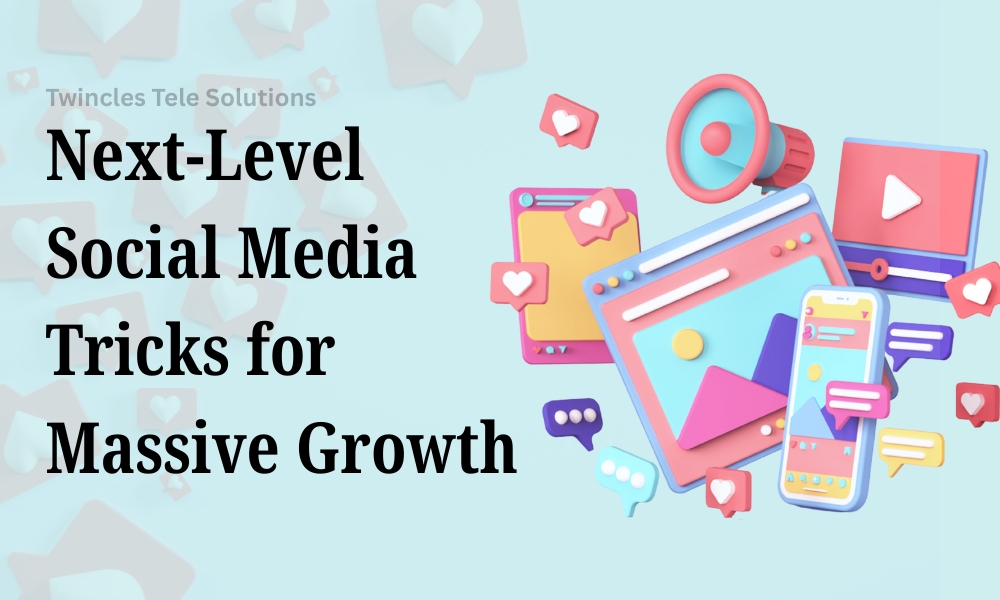
Next-Level Social Media Tricks for Massive Growth

In today’s digital-first world, social media isn’t just an option — it’s the engine that powers brand visibility, customer engagement, and growth. But with platforms evolving constantly, how can you break through the noise? Here are proven hacks that can supercharge your social media strategy and set your brand up for Massive Growth. 1. Master Insights About Your Audience Don’t post for everyone — post for someone. Use insights, analytics, and audience personas to understand:– What content do they engage with – When they’re most active – Which platforms do they prefer Hack: Use tools like Meta Audience Insights or X (Twitter) Analytics to dig deep into follower interests and behaviors. 2. Follow the 80/20 Rule for Content Create content that balances value and promotion:– 80% should educate, entertain, or inspire – 20% can promote your product or service Hack: Stay Fresh with Weekly Content Categories: Tips, Quotes, Reels, and More 3. Leverage Short-Form Video Reels and YouTube Shorts are dominating. People want quick, engaging, and valuable content. Hack: Turn blog posts into bite-sized videos or animate testimonials and case studies into reels. 4. Repurpose Like a Pro Turn one piece of content into many:– Blog post → Carousel + Reel + Tweet Thread – Webinar → Quote graphics + Reels + LinkedIn post Hack: Use a “content multiplier” strategy — squeeze maximum value from every idea. 5. The Perfect Moment to Post Timing can make or break engagement. Hack: Use platform-specific insights to identify peak engagement hours and schedule accordingly (e.g., Instagram: 11 AM – 1 PM & 7–9 PM are often golden). 6. Master the Hook & CTA Your first 3 seconds or 10 words decide if someone scrolls or stays. Hack: Start with bold hooks like:– “No one’s talking about this…” – “The Biggest Missteps in Business Strategy”And end with strong CTAs: “Save this!”, “Tag a friend”, “DM us to learn more”. Hack: Use platform-specific insights to identify peak engagement hours and schedule accordingly (e.g., Instagram: 11 AM – 1 PM & 7–9 PM are often golden). 7. Collaborate with Micro-Influencers Big influencers = big cost. Micro-influencers (with 5k–50k followers) tend to build deeper connections and drive stronger engagement. Hack: Reach out to 5 micro-influencers in your niche, offer your product or value exchange, and create co-branded content. 8. Engage, Don’t Just Broadcast Social media is a conversation, not a loudspeaker. Reply to comments, react to stories, and interact in DMs. Hack: Spend 15–30 mins a day engaging with your followers and target audience — build loyalty organically. 9. Use Data to Double Down Track what’s working — and do more of that. Hack: Use native insights + tools like Buffer, Sprout Social, or Later to identify top-performing posts, formats, and times. 10. Test Constantly From captions to formats to hashtags — test everything. Hack: A/B test two versions of the same reel or image with different captions or hooks. See what resonates.

Next-Level Social Media Tricks for Massive Growth Read More »

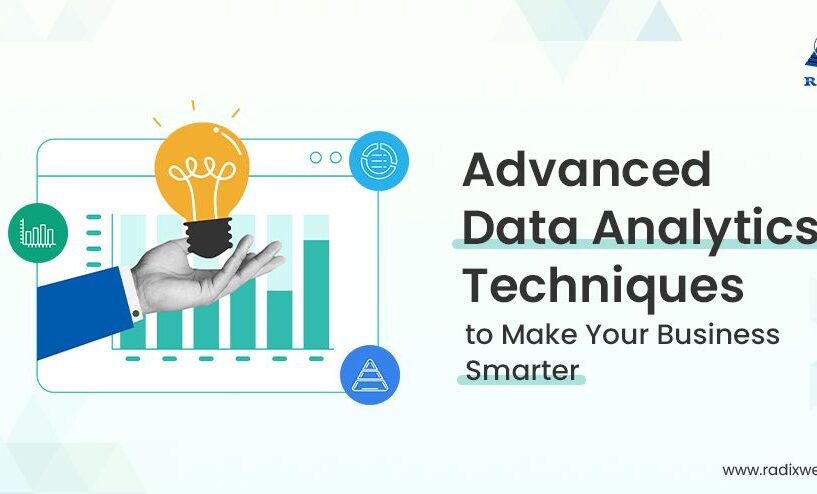
The Role of Data Analytics in Digital Marketing

Welcome to Twincles Digital ! The Role of Data Analytics in Digital Marketing Data Collection *Tools and Methods for Gathering Data* Web Analytics Tools    – Google Analytics : Tracks website traffic, user behavior, conversion rates, and more.    – Adobe Analytics : Provides in-depth analysis of customer journeys and advanced segmentation.    – Matomo : An open-source alternative to Google Analytics, offering similar features. Social Media Analytics Tools    – Facebook Insights : Tracks page performance, audience demographics, and engagement.    – Twitter Analytics : Measures tweet impressions, engagement, and follower growth.    – Instagram Insights : Provides data on follower activity, content interactions, and reach. Customer Relationship Management (CRM) Systems    – Salesforce : Offers comprehensive tools for tracking customer interactions, sales data, and marketing campaigns.    – HubSpot : Integrates marketing, sales, and service data to provide a complete view of customer interactions. Email Marketing Platforms    – Mailchimp : Tracks email open rates, click-through rates, and conversion metrics.    – Constant Contact : Provides detailed reports on email campaign performance and audience engagement. Ad Platforms Analytics    – Google Ads : Offers insights into ad performance, click-through rates, and conversion tracking.    – Facebook Ads Manager : Tracks ad performance across Facebook and Instagram, including engagement and conversion metrics. Survey Tools    – SurveyMonkey : Gather customer feedback through surveys.    – Typeform : Creates engaging forms and surveys to collect user data.   Data Collection *Techniques for Interpreting Marketing Data* Descriptive Analytics    – Overview : Summarizes past data to understand what has happened.    – Tools : Google Analytics, Excel.    – Techniques : Data visualization (charts, graphs), summary statistics (mean, median, mode). Diagnostic Analytics    – Overview : Investigates why something happened.    – Tools : SQL, Python, R.    – Techniques : Correlation analysis, regression analysis, root cause analysis. Predictive Analytics    – Overview : Uses historical data to predict future outcomes.    – Tools : Machine learning platforms (TensorFlow, Azure ML).    – Techniques : Time series analysis, regression models, classification algorithms. Prescriptive Analytics    – Overview : Provides recommendations for actions to achieve desired outcomes.    – Tools : Optimization tools (Gurobi, IBM CPLEX).    – Techniques : Decision trees, optimization models, simulation. Sentiment Analysis    – Overview : Analyzes customer feedback and social media mentions to gauge public sentiment.    – Tools : Natural language processing (NLP) tools like TextBlob, sentiment analysis APIs.    – Techniques : Text mining, sentiment scoring, opinion mining.   Actionable Insights *Turning Data into Strategic Actions* Identifying Key Performance Indicators (KPIs)    – Examples : Conversion rate, customer acquisition cost (CAC), customer lifetime value (CLV), return on ad spend (ROAS).    – Implementation : Regularly track and analyze KPIs to gauge marketing performance. Segmentation and Targeting    – Overview : Divide your audience into segments based on demographics, behavior, and preferences.    – Techniques : Cluster analysis, RFM (recency, frequency, monetary) analysis.    – Actions : Develop tailored marketing campaigns for different segments to improve engagement and conversion rates. Personalization    – Overview : Use data to create personalized marketing messages and offers.    – Techniques : Dynamic content, personalized email campaigns, targeted ads.    – Actions : Implement recommendation engines and personalized landing pages to enhance user experience. Optimizing Marketing Strategies    – Overview : Use A/B testing and multivariate testing to identify the most effective marketing tactics.    – Techniques : Split testing, conversion rate optimization (CRO).    – Actions : Continuously refine and optimize marketing strategies based on test results and data insights. Predictive Modeling for Future Campaigns    – Overview : Use predictive analytics to forecast the success of future marketing campaigns.    – Techniques : Predictive scoring, propensity modeling.    – Actions : Allocate budget and resources to the most promising campaigns based on predictive insights.  

The Role of Data Analytics in Digital Marketing Read More »

PPC Advertising: Maximizing Your ROI

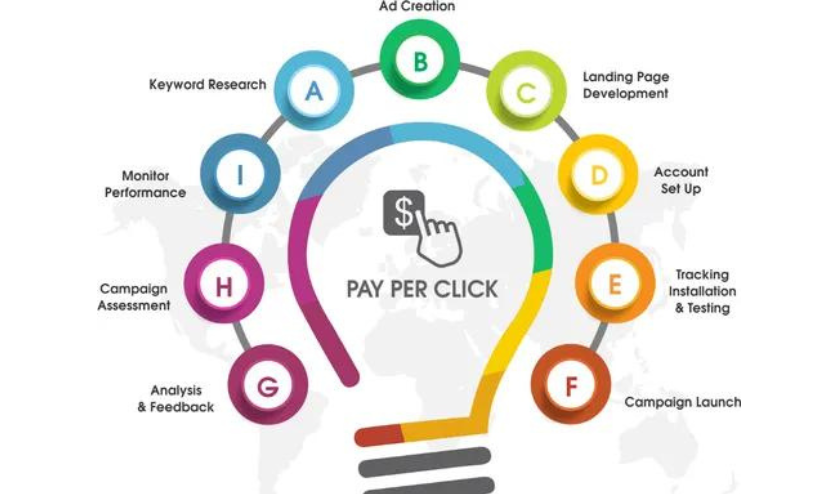
Welcome to Twincles Digital ! PPC Advertising: Maximizing Your ROI Ad Platforms Google Ads        – Overview : Google Ads is the most popular PPC platform, allowing businesses to place ads on Google search results, YouTube, and other Google properties.       – Key Features :       – Search Ads : Appear on Google SERPs.       – Display Ads : Appear on Google’s partner websites.       – Video Ads : Appear on YouTube.       – Shopping Ads : Showcase products directly in SERPs.       – Benefits : Extensive reach, advanced targeting options, detailed analytics. Bing Ads (Microsoft Advertising)     – Overview : Bing Ads allows businesses to place ads on Bing, Yahoo, and AOL search engines.      – Key Features :      – Search Ads : Appear on Bing and partner networks.      – Audience Ads : Appear on Microsoft’s network of sites.      – Benefits : Lower competition, cost-effective, reaches a unique audience. Social Media Ads      – Facebook and Instagram Ads :      – Overview : Allows businesses to target users on Facebook and Instagram.      – Key Features : Image and video ads, carousel ads, stories ads.      – Benefits : Detailed demographic targeting, high engagement potential.  LinkedIn Ads      –  Overview : Targets professionals and B2B audiences.      – Key Features : Sponsored content, message ads, dynamic ads.      – Benefits : Targeting based on job title, industry, and company size. Twitter Ads :      – Overview : Targets users on Twitter.      – Key Features : Promoted tweets, accounts, and trends.      – Benefits : Real-time engagement, hashtag targeting.   Keyword Research   *Finding the Right Keywords for Your Campaigns* Using Keyword Research Tools    – Google Keyword Planner : Provides keyword ideas and traffic estimates.    – SEMrush : Offers competitive analysis and keyword difficulty scores.    – Ahrefs : Provides keyword suggestions and SERP analysis.    – Moz Keyword Explorer : Offers keyword suggestions and metrics like search volume and difficulty. Identifying Relevant Keywords    – Primary Keywords : Core terms directly related to your product or service.    – Long-Tail Keywords : More specific phrases with lower competition.    – Negative Keywords : Terms you exclude to avoid irrelevant traffic. Analyzing Competitor Keywords    – Competitor Research : Use tools like SEMrush and Ahrefs to see what keywords your competitors are targeting.    – Gap Analysis : Identify keywords your competitors rank for that you don’t, and consider targeting those. Considering User Intent    – Informational Keywords : Users looking for information (e.g., “how to”).    – Navigational Keywords : Users looking for a specific site (e.g., “Facebook login”).    – Transactional Keywords : Users looking to make a purchase (e.g., “buy shoes online”). Ad Creation   *Crafting Effective Ad Copy and Visuals* Writing Compelling Ad Copy    – Headline : Capture attention with a clear, concise, and engaging headline.    – Description : Provide additional details and a call-to-action (CTA).    – Keywords : Include relevant keywords in your ad copy for better relevance.    – CTA : Encourage users to take action (e.g., “Buy Now,” “Learn More”). Creating Engaging Visuals    – Images : Use high-quality, relevant images that capture attention.    – Videos : Short, engaging videos can enhance user interaction.    – Design Tips :      – Ensure visual consistency with your brand.      – Use contrasting colors to make text stand out.      – Keep visuals simple and focused on the main message. Ad Formats    – Text Ads : Simple and effective for search engines.    – Display Ads : Visual ads that appear on websites within the Google Display Network.    – Responsive Ads : Automatically adjust size, appearance, and format to fit available ad spaces.   Optimization   *A/B Testing, Bid Adjustments, Quality Score Improvements* A/B Testing    – Overview : Testing different versions of your ads to see which performs better.    – Elements to Test :      – Headlines and descriptions.      – CTAs.      – Visuals.      – Landing pages.    – Implementation : Run tests simultaneously to ensure fair comparison and use tools like Google Optimize. Bid Adjustments    – Manual Adjustments : Increase or decrease bids based on performance.    – Automated Bidding : Use strategies like target CPA (cost per acquisition) or ROAS (return on ad spend) for automated adjustments.    – Device Adjustments : Adjust bids based on device performance (e.g., higher bids for mobile if it converts better). Quality Score Improvements    – Factors Affecting Quality Score :      – CTR (Click-Through Rate) : Higher CTR improves quality score.      –  Ad Relevance : Ensure your ad copy is relevant to the keywords and landing page.      – Landing Page Experience : Optimize landing pages for speed, relevance, and user experience.    – Improvement Tips :      – Continuously refine and test ad copy.      – Ensure keywords are closely related to ad groups.      – Optimize landing pages for better user experience and relevance. By effectively selecting the right ad platforms, conducting thorough keyword research, creating compelling ads, and continuously optimizing through A/B testing and bid adjustments, businesses can maximize their ROI from PPC advertising campaigns.  

PPC Advertising: Maximizing Your ROI Read More »

Social Media Marketing: Strategies for Increased Engagement

Welcome to Twincles Digital ! Social Media Marketing: Strategies for Increased Engagement Platform Selection *Choosing the Right Social Media Platforms* Identify Your Audience      – Research Demographics : Understand where your target audience spends their time. Different platforms cater to different age groups, interests, and behaviors.      – Facebook : Broad age range, popular among adults.      – Instagram : Younger audience, visual content.      – LinkedIn : Professionals and B2B.      – Twitter : Real-time updates, news, and trending topics.      – TikTok : Gen Z, short-form videos.      – Pinterest : DIY, fashion, food, and lifestyle interests. Assess Platform Strengths       – Content Types : Each platform supports different types of content.      – Facebook : Versatile (text, images, videos, live streams).      – Instagram : Visual content (images, stories, reels).      – LinkedIn : Professional content (articles, job postings).      – Twitter : Short updates, hashtags.      – TikTok : Creative, short-form videos.      – Pinterest : Images, infographics, how-to guides. Align with Business Goals   – Brand Awareness : Instagram, Facebook, TikTok.    – Lead Generation : LinkedIn, Facebook.    – Customer Engagement : Twitter, Instagram, Facebook.    – Sales : Pinterest, Instagram (Shop features).   Content Creation *Types of Content That Perform Well* Visual Content        – Images and Graphics : High-quality images, infographics, and branded graphics.      – Tips : Use tools like Canva or Adobe Spark for professional designs.      – Videos : Short clips, tutorials, behind-the-scenes, product demos.      – Tips : Use tools like Adobe Premiere or iMovie for editing; consider live videos for real-time engagement. Interactive Content      – Polls and Quizzes : Engage the audience through interactive questions.      – Tips : Use platform-native features like Instagram Stories polls or Twitter polls.    – Contests and Giveaways : Encourage participation and sharing.      – Tips : Clearly outline rules and offer desirable prizes.   User-Generated Content (UGC)      – Customer Photos and Reviews : Showcase real-life use of your products.       – Tips : Create hashtags for users to share their experiences.       – Testimonials and Case Studies : Highlight customer success stories.       – Tips : Feature these prominently on your profile and website. Educational Content      – How-To Guides and Tutorials : Provide valuable information.     – Tips : Break down complex topics into easy-to-understand steps.     – Industry News and Updates : Share relevant news and trends.      – Tips : Stay updated with the latest industry developments and share insights.   Engagement Techniques *Interactive Posts and User-Generated Content* Interactive Posts    – Questions and Polls : Directly ask your audience for their opinions or preferences.      – Example : “What’s your favorite product feature? Vote in our poll!”    – Live Videos and Q&A Sessions : Real-time interaction with followers.      –  Tips : Announce live sessions in advance and encourage participation. User-Generated Content      – Encourage Sharing : Create campaigns that motivate users to share their content.      – Example : Photo contests with branded hashtags.      – Feature Followers : Highlight user posts on your profile.      – Tips : Always give credit to the original creators. Engage with Comments       – Respond Promptly : Reply to comments and messages quickly.      – Tips : Personalize responses and address users by their names.      – Start Conversations : Ask follow-up questions to keep the dialogue going.      – Example : “Thank you for your feedback! How do you use our product in your daily routine?”   Analytics **Tools to Measure and Improve Engagement** Native Platform Analytics    – Facebook Insights : Tracks page likes, post reach, and engagement.    – Instagram Insights : Provides data on followers, content interactions, and story performance.    – Twitter Analytics : Measures tweet impressions, engagement rates, and follower growth.    – LinkedIn Analytics : Monitors post performance, follower demographics, and engagement metrics.    – TikTok Analytics : Offers insights on video views, follower activity, and trending content. Third-Party Tools      – Hootsuite : Comprehensive analytics for multiple platforms, scheduling, and reporting.    – Buffer : Simplified analytics and post-scheduling, with performance tracking.    – Sprout Social : Advanced reporting, audience insights, and engagement metrics.    – Google Analytics : Tracks social media traffic to your website and measures conversion rates. Key Metrics to Track    – Engagement Rate : Likes, comments, shares, and reactions.    – Reach and Impressions : Number of people who see your content and how often it’s seen.    – Click-Through Rate (CTR) : How often people click on links in your posts.    – Follower Growth : Increase or decrease in your follower count over time.    – Conversion Rate : How often social media interactions lead to desired actions (e.g., sales, sign-ups). By effectively selecting the right platforms, creating engaging content, utilizing interactive techniques, and analyzing performance with the right tools, businesses can significantly enhance their social media engagement and achieve their marketing goals in 2024.  

Social Media Marketing: Strategies for Increased Engagement Read More »

SEO Best Practices for 2024: What You Need to Know

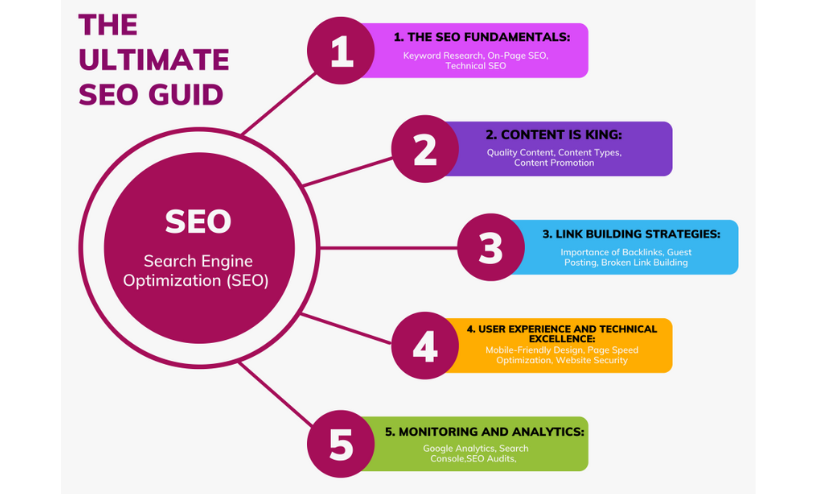
Welcome to Twincles Digital ! SEO Best Practices for 2024: What You Need to Know Basic Points On page SEO Off page SEO Technical SEO On Page SEO :   Title Tags      Importance :       Title tags are crucial for SEO as they help search engines understand the content of a page and are often the first impression users have in SERPs.     Best Practices :      – Keep it under 60 characters.      – Include primary keywords.      – Make it compelling to encourage clicks.      – Avoid keyword stuffing. Meta Descriptions Importance :       Meta descriptions provide a brief summary of the page content and can influence click-through rates from search results.   Best Practices :      – Keep it under 160 characters.      – Include primary and secondary keywords.      – Make it engaging and descriptive.      – Ensure each page has a unique meta description. Content Optimization   Importance :        High-quality, relevant content is essential for ranking and user engagement.  Best Practices :      – Conduct thorough keyword research to understand what your audience is searching for.      – Use keywords naturally and avoid keyword stuffing.      – Structure content with headers, bullet points, and short paragraphs.      – Regularly update content to keep it fresh and relevant.      – Optimize images with alt text and proper formatting.   OFF Page SEO : Backlink Strategies   Importance :       Backlinks from reputable sites signal to search engines that your site is authoritative and trustworthy.     Best Practices :      – Focus on quality over quantity.      – Seek backlinks from authoritative, relevant sites.      – Use a mix of anchor texts.      – Engage in ethical link-building practices to avoid penalties. Guest Blogging Importance :     Guest blogging helps build backlinks, increase brand exposure, and establish authority in your niche.   Best Practices :      – Choose reputable blogs with a strong readership.      – Provide high-quality, original content.      – Include a natural, relevant backlink to your site.      – Engage with readers in the comments section to build relationships.   Technical SEO : Site Speed  Importance :       Page load speed is a critical ranking factor and affects user experience.     Best Practices :      – Optimize images and compress files.      – Minimize HTTP requests.      – Use a content delivery network (CDN).      – Implement lazy loading for images and videos. Mobile Optimization     Importance :      With the increasing use of mobile devices, mobile optimization is crucial for SEO.    Best Practices :      – Use responsive design to ensure your site adapts to different screen sizes.      – Optimize touch elements to be easily tappable.      – Ensure fast mobile load times.      – Avoid intrusive interstitials that disrupt the user experience. Schema Markup     Importance :      Schema markup helps search engines understand your content better and can improve how your site appears in SERPs.    Best Practices :      – Use schema.org vocabulary to markup your pages.      – Implement structured data for reviews, events, products, and FAQs.      – Regularly test and validate your structured data using Google’s Rich Results Test tool.   Emerging Trends   AI in SEO     Usage :      AI can analyze search patterns, automate tasks, and provide insights for content optimization.      Impact      – Enhance keyword research with AI tools.      – Improve user experience through personalized content recommendations.      – Automate routine SEO tasks such as reporting and analysis. Voice Search Optimization     Importance :     The rise of voice-activated devices makes voice search a growing trend in SEO.    Best Practices :         – Optimize for natural language queries.      – Focus on long-tail keywords and question phrases.      – Ensure your content is concise and answers common questions.      – Implement local SEO strategies, as many voice searches are location-specific. By adhering to these best practices for on-page, off-page, and technical SEO, and staying ahead of emerging trends like AI and voice search, businesses can enhance their search engine visibility, improve user experience, and drive more organic traffic in 2024.  

SEO Best Practices for 2024: What You Need to Know Read More »

The Ultimate Guide to Digital Marketing in 2024

Welcome to Twincles Digital ! The Ultimate Guide to Digital Marketing in 2024 The Ultimate Guide to Digital Marketing in 2024 Introduction: Overview of the Importance of Digital Marketing Digital marketing has become an essential aspect of modern business strategy, providing unparalleled opportunities for reaching and engaging with customers. In 2024, the importance of digital marketing continues to grow as more consumers turn to online platforms for their purchasing decisions. Businesses must leverage digital marketing to enhance their online presence, drive sales, and remain competitive in an increasingly digital world. Key Components : 1.  SEO ( Search Engine Optimization ) : Definition :  The process of optimizing a website to rank higher in search engine results pages (SERPs). Key Techniques : Keyword research, on-page optimization, link building, and technical SEO. Importance : Higher visibility in search engines leads to increased traffic and potential conversions. 2.  SEM ( Search Engine Marketing ) : Definition :  A form of internet marketing that involves the promotion of websites by increasing their visibility in SERPs through paid advertising. Key Techniques : Pay-per-click (PPC) advertising, keyword bidding, ad creation, and campaign management. Importance : Provides immediate visibility and can drive targeted traffic to a website. 3.   Content Marketing Definition : The creation and distribution of valuable, relevant, and consistent content to attract and retain a clearly defined audience. Key Techniques : Blogging, video creation, infographics, Ebooks, and whitepapers. Importance : Builds brand authority, enhances customer engagement, and supports SEO efforts. 4.   Social Media Marketing ( SMM ) : Definition : The use of social media platforms to promote a product or service. Key Techniques : Content creation, audience engagement, paid social advertising, and analytics. Importance : Enhances brand awareness, fosters customer relationships, and drives traffic. 5.   Email Marketing : Definition : The use of email to promote products or services while developing relationships with potential and existing customers. Key Techniques : Email list building, segmentation, personalized content, and performance tracking. Importance : Cost-effective, drives conversions, and nurtures customer loyalty.

The Ultimate Guide to Digital Marketing in 2024 Read More »

Scroll to Top